
Table of Contents
Introduction to the issue of a PC not turning on
Picture this scenario: you are coming home from work and want to enjoy a good binge-watch on your favorite series or enjoy a good gaming session. You make your way to your pc not turning on, and press the power button, only to see a black screen. Nothing happens. The evening you were looking forward to has now turned into an unnecessary annoyance.
Dealing with a computer that just will not turn on is an issue that many have to face at some point. What causes it? It could just be something as simple as a loose cable, or there could be a whole plethora of problems that could be occurring with your PC components. In this guide, we will try to explain everything that goes into identifying the problem and help you get the PC working. This guide is designed to help you solve this problem and avoid unnecessary headaches. Whether you are a technology enthusiast or just looking to get your computer working, we are here to help.
Common causes for a PC not turning on
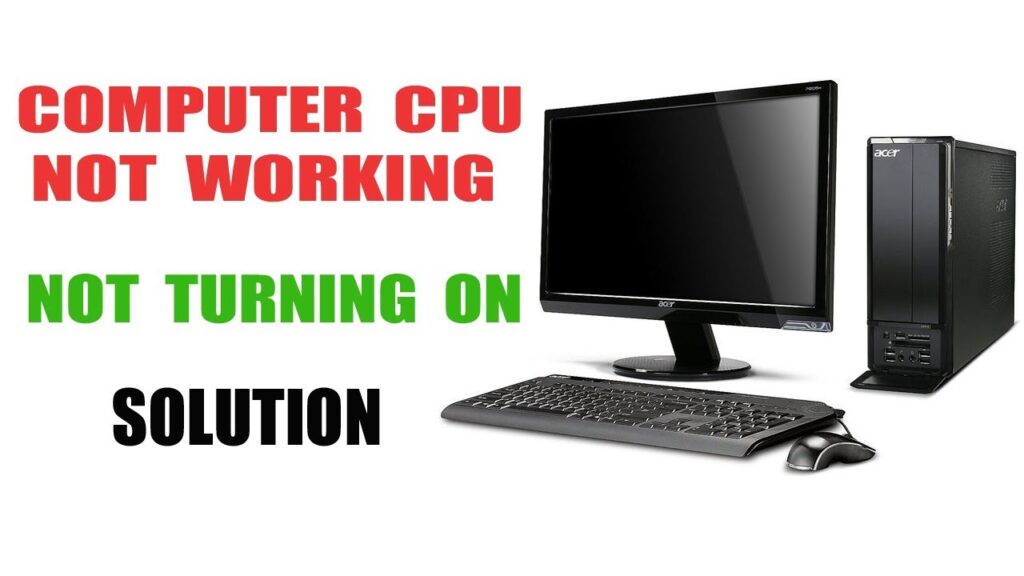
One of the most aggravating problems one can encounter with their computer is when it will not power on. There are several reasons why this can happen. To begin with, power supply failure is one of the most common reasons this could happen. If the power supply is not providing power, then the computer will not be able to start.
Another common reason can be caused by loose cables. If some cables are not connected properly, then the computer will not be able to be powered on. Also, issues with the motherboard or RAM can be issues as well. Without those components, the computer cannot complete the necessary start-up sequence.
In addition to this, some peripherals can cause problems as well. If some USB devices are broken or do not work, then the computer may hang up when starting. Lastly, internal dust buildup can cause overheating, which can lead to problems as well. If there is too much dust, then the computer may not be able to start up again after shutting down.
Troubleshooting steps for the most common causes
Start from the beginning and check the plugs. If the plugs are secure, move on to the next step, making sure to check for any loose connections. Try plugging it into another outlet; the outlet could be the cause of the problem. Check your power supply unit and toggle any switches. This could reset your unit.
Check for signs of life. Listen for fan activity because the device may not be completely dead. If nothing happens, consider removing non-essential startup devices like external hard drives and USBs. Do a hard reset, disconnect all cables, and push the power button for ten seconds. After that, try everything again.
Advanced troubleshooting for more complex issues
If the basic steps didn’t help turn the pc not turning on, it is time to take a closer look at some of the components. First, check the motherboard and see if there are any signs of burns or damaged parts, as a damaged motherboard can stop power from reaching important parts of the system.
Next, examine the RAM modules. Try reseating the sticks and try booting the system with one RAM module at a time. Additionally, memory modules can sometimes get faulty, and dust can also create connection issues and lead to a no-post condition.
If the previous steps didn’t help the pc not turning on, check the power supply unit (PSU) if you have a multimeter, you can check the PSU to see if the voltages are being delivered correctly. An unreliable PSU can turn off or deliver incorrect power levels and can cause the PC not to turn on.
Finally, if you have any peripherals plugged into the pc not turning on, try disconnecting them and see if the PC turns on. Some peripherals can cause the PC not to turn on.
Tips for preventing future problems with your pc not turning on power supply
Power troubles can be avoided through computer maintenance. To start, make sure your work area has a consistent power supply. Over the course of time, fluctuations can be harmful to the internal parts of the computer.
Take time to clean pc not turning on the inside of your system regularly, to avoid dust buildup, which can lead to overheating and lead to short-circuits. Also, make sure to check the connections and cables; faulty or damaged cables are often responsible for failure to start.
Think about adding a surge protector to protect from the addition of unanticipated voltage. Over the span of time, this addition can save you time, money, and trouble.
Make sure to update your drivers and operating system. This can be an extra step, but sometimes, problems with hardware and start-up can be the result of an outdated system.
Use diagnostic tools to check the status of all of the main parts of your computer. Taking a look at the main parts can help avoid loss of concern on major issues before they become major issues.
The benefits of seeking professional help
When your computer won’t turn on, resolving the problem yourself can be tempting, but it is better to leave it to the professionals. Fixing your computer can be time-consuming, but professionals can do it quickly.
People are losing time and money when they try to fix it themselves. Mechanics have to keep their knowledge up to date and pay attention to all the latest trends to be able to solve problems quickly, and they can solve underlying problems that you are unaware of.
Because pc not turning on, someone else is fixing the problem; you do not have to worry about whether you will be able to fix the problem yourself, and you do not have to stress about whether you are going to make the problem worse.
When your pc not turning on, pay someone else to solve your problem. It is going to solve your problem at that moment, but you are also going to have to pay more money if the problem is not solved down the road.
Conclusion and final thoughts
Most people experience frustration when dealing with a pc not turning on. However, by understanding the possible causes and their respective solutions, the problem can become manageable. In some cases, all it takes is checking and adjusting the power connections and reseating some components. However, if the pc not turning on still does not turn on, it may become necessary to dig deeper into more sophisticated troubleshooting techniques.
Instead of dealing with a pc not turning on that does not turn on, it is better to prevent the problem from occurring in the first place. Regular system maintenance can help keep the system in great shape and greatly reduce the chances of the problem occurring. Ensuring that ventilation is proper and that the system software is updated are just a few of the maintenance tasks that can help extend their lives.
Dealing with systems that are not turning on can be problematic. When all else fails, and the system still qualifies as a machine that must be used, it may be a good time to spend some capital to acquire the services of an expert. Experts are problem solvers who have the baseline knowledge and the necessary tools in order to complete complex and most complex problems.
Having the knowledge and understanding to identify the main power cause is a great starting point.Pc not turning on can be the system itself, through strategies such as free repairs and as well as paid repairs. In the end, the knowledge and understanding of the system is the main tool that will reduce the stress that people will have when dealing with systems.












Leave a Reply