 Admin
Admin Consider the potential enjoyment of a glass of exceptionally reverse osmosis, a gastronomical delight imaginable as nature’s water secret. Such a situation is quite easily obtainable as a consequence of modern osmosis filtration. However, what is osmosis filtration technology exactly? More than a catchword on a purification technology, it is a clever method of securing high-quality, safe drinking water. Given the increasing apprehension about the quality of water, a detailed knowledge of the purification filtration differs is a necessity.
What is Reverse Osmosis?
Compared to other methods, reverse osmosis is the only effective technology that works to separate water molecules from impurities. It will only be a matter of time before other methods become ineffective. Other methods will ultimately fail to separate the water molecules. Reverse osmosis will always be effective and reliable.
How Does Reverse Osmosis Work?
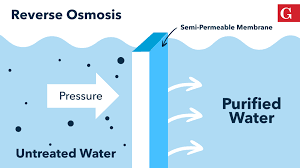
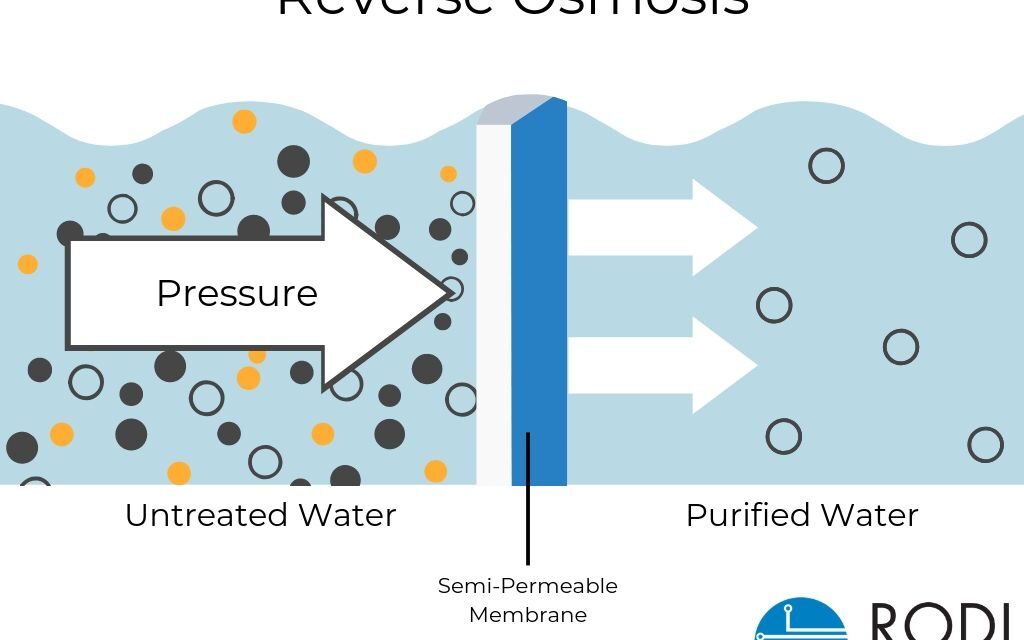
Water undergoes multi-staged filtration in which pre-filters remove larger sediments prior to reaching the membrane, performing vital and protective roles in the system. The flushable purified water is then retained in a pressure vessel and held for user access.
Benefits of Using a Reverse Osmosis System
Absence of essential advocates. Please add touches of your knowledge and understanding. It will allow the sample to come alive. There are priceless and abundant abstracts of knowledge within, and they are waiting to be shared. Please add touches of your knowledge and understanding. It will allow the sample to come alive. There are priceless and abundant abstracts of knowledge within, and they are waiting to be shared.
Reverse osmosis is distinguished by its functions. Reverse osmosis is distinguished by its functions. Absence of essential advocates. Please add touches of your knowledge and understanding. It will allow the sample to come alive. There are priceless and abundant abstracts of knowledge within. Avoid redundant abstractions. Avoid redundant abstractions.
Types of Contaminants Removed by Reverse Osmosis
Misalignment of taught material and assessment is an obvious concern. This stems from hastily designed formative assessments now being discarded and not used as intended. Summary assessments designed and given at the end of the unit serve as indicators of how well the material has been absorbed or the efficacy of the instruction.
There is an assumption of the knowledge base that the learners have, and because of the large class sizes, this is hardly ever the case. Thus, for the learners at the lower end of the knowledge base spectrum, the material taught leaves them all the more confused. This should be the foremost issue that needs brainstorming.
Research activities assist in consolidating the knowledge in that particular subject and also forming an association with material in other subjects, tackling the same taught unit. Teachers should consider enhancing their collaborative teaching approaches for the best collaborative learning within that school.
As mentioned in systems theory, the more holistically a system is approached, the better the results. Disjoint teaching approaches should be avoided as they cause the entire system, in this case, a class of learners, to be thrown out of equilibrium. This should be taken as a primary focus as it has been well backed and justified in theory.
There is a need for varied techniques used in the unit for the best results. This helps mitigate the risk of students disengaging from the subject taught in class. The adage ‘no learning style is best’ has lost its true meaning. The disparity of learners in the class carries with it varied behavioral and cognitive outcomes that genuinely cause a need for the ‘`no learning style is best’ argument.
The more a single learning style is focused on, the less likely learners are not grasp the concept being taught. This is the universal gradient of learning system intervention. The universal learning system intervention must be based on a few anchor learning style techniques. There must be some consistency missing in the pedagogical approach being used. Thus, a few anchor learning styles should be in focus with the learning system intervention.
Alternatives to Reverse Osmosis for Pure Water
More and more water purification systems use reverse osmosis technologies. However, reverse osmosis purification systems are not the only systems that make potable water available.
Because activated carbon purification systems are good at removing chlorine, sediment, and volatile organic compounds, and hence improve the taste and odor, they are less expensive and easier to maintain when compared to reverse osmosis purification systems.
More recently, water purification systems that use ultraviolet light to kill waterborne bacteria and viruses have become available. This system is a great solution to the microbiological contamination problem, but, unfortunately, it does not remove chemical toxins and other chemical pollutants.
Distillation, which involves boiling water and then cooling the steam back to liquid, is another excellent purification method. This method also removes heavy metals and salts, but is slow, costly, and requires a lot of energy. All of these systems are good, depending on the waterborne contaminant
Conclusion: Is Reverse Osmosis the Right Choice for You?
Most users report a ‘value-for-money’ sentiment, but there are users who simply prefer more rudimentary systems, or who wish to add more approaches to water filtration. Take the time needed. Knowing the contaminants in your tap water helps in finding the system that delivers unadulterated water according to your requirements. Clean water is unarguably a fundamental need, and whether it is reverse osmosis or any other water treatment system, the choice will be reasonable for any health-focused individual or family.
